This collection is also available in Archives & Manuscripts
View In Archives »
Collection Data
- Description
- The Living Theatre was founded by Judith Malina and Julian Beck in 1947. The records consist of scripts and related performance papers. Also included are business papers, financial records, clippings, diaries, photographs and correspondence. There is little material reflecting the personal lives of Malina and Beck.
- Names
- Living Theatre (New York, N.Y.) (Creator)
- Dates / Origin
- Date Created: 1945 - 1991
- Library locations
- Billy Rose Theatre Division
- Shelf locator: *T-Mss 1988-005
- Topics
- Community theater
- Experimental theater -- New York (State) -- New York
- Off Off-Broadway theater
- Pacifists -- United States
- Political plays
- Prison theater
- Street theater
- Theater -- New York (State) -- New York
- Theater -- Political aspects
- Theater -- Production and direction
- Theater -- United States
- Theater, Environmental
- Theatrical producers and directors
- Beck, Julian, 1925-1985
- Malina, Judith, 1926-2015
- Piscator, Erwin, 1893-1966
- Genres
- Posters
- scripts (documents)
- Correspondence
- Clippings
- Notes
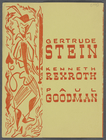
- Biographical/historical: The Living Theatre was founded in 1947 by Judith Malina(1926-), a student of Erwin Piscator, and Julian Beck (1925-1985), an abstract expressionist painter of the New York School. The name reflected the founders' desire to create a theater essentially of its own time, which would be a part of the community. It also reflected their vision of a theater that would challenge and move the audience. In planning for the development of the Living Theatre, Malina and Beck, who were married in 1948, consulted and collaborated with many people including Robert Edmond Jones, Jean Cocteau, John Cage, Paul Goodman, Eric Bentley, Frederick Kiesler, Aline Bernstein and others, some of whom became "Sponsors" of the Living Theatre. The first performances of the Living Theatre were presented in the Becks' apartment in 1951. Later that year, the Living Theatre moved to the Cherry Lane Theatre, and inaugurated their initial season with Gertrude Stein's Dr. Faustus Lights the Lights, Paul Goodman's Faustina, and Kenneth Rexroth's Beyond the Mountains.
During the 1950s the Living Theatre continued to stage plays by Pablo Picasso, August Strindberg, Luigi Pirandello, Paul Goodman, Claude Fredericks, T.S. Eliot, Jean Cocteau and William Carlos Williams. They also staged performances by contemporary poets and performing artists including Dylan Thomas, John Cage, Alan Hovhaness, Lucia Dlugoszewski, Judith Martin, James Waring, Allen Ginsberg and Willard Maas.
In 1954 the Living Theatre moved to a loft at Broadway and 100th Street. By 1958, they had moved into their 14th Street theater where they were to remain until the Internal Revenue Service forced their closing in 1963. Among the highlights of their years at 14th Street were productions of Many Loves by William Carlos Williams, The Connection by Jack Gelber, The Marrying Maiden by Jackson MacLow, In the Jungle of the Cities by Bertolt Brecht and The Brig by Kenneth H. Brown.
An invitation to participate at the Theatres des Nations festival in Paris prompted the Living Theatre's first tour of Europe in the summer of 1961. The company performed The Connection, In the Jungle of the Cities, and Many Loves and was awarded the Grand Prix of the festival. The tour also included Italy and Germany, and the success of these performances was reflected in a series of invitations to return to Europe in 1962.
In 1964 the Becks were indicted by a Federal Grand Jury in connection with their protests against the eviction from the 14th Street theater. Malina and Beck were found guilty, but were allowed to fulfill their obligations to perform in England before serving their sentences. In early 1965, having served their sentences, they re-joined the company in Europe, beginning a voluntary exile that lasted several years. During this period the Living Theatre performed throughout Europe staging Genet's The Maids, as well as their own works, often created collectively, and evolving from performance to performance. These included Mysteries and Smaller Pieces, Paradise Now and Frankenstein.
The Living Theatre returned to the United States in 1968 and gave their first American performance of Mysteries and Smaller Pieces at the Yale School of Drama. As a communal theater, they toured the United States before returning to Europe in March of 1969. In 1970-1971, the Becks took the Living Theatre to Brazil, where they performed in the streets, developing the cycle of plays titled The Legacy of Cain. Arrested on alleged possession of marijuana, Malina, Beck and other members of the company were imprisoned in Brazil. Upon their return to the United States they performed in the streets of Pittsburgh, staging The Legacy of Cain, including, Six Public Acts and The Money Tower. In 1975 the Living Theatre returned to Europe, and from their base in Rome continued to bring their vision of a pacifist anarchism to the streets, in an effort to reach audiences who might never enter a theater.
In 1984 the Living Theatre came back to the United States again and performed a repertory of four works: The Archaeology of Sleep, the last project completed by Julian Beck before his death in 1985, Antigone, The Yellow Methuselah and The One and the Many by Ernest Toller. In May 1989, Judith Malina and Hanon Reznikov opened the Living Theatre on Third Street in Manhattan with Armand Schwerner's The Tablets. It was the Theatre's first New York home in 26 years and where they continue to perform.
- Content: The records of the Living Theatre span the years 1945-1991 and document the development of the company from its earliest performances, through its period of exile in Europe and work in Brazil, to its contemporary performances at the permanent theater in New York City. The records include correspondence, financial papers, legal papers, production files, notebooks and calendars, scripts, programs, photographs, promotional materials, clippings, and oversize files. There are a few family letters present, but little in the collection can be categorized as personal papers. However, because the Living Theatre was so much a part of their lives, the records mirror a personal history of Judith Malina and Julian Beck through their work in developing this unique form of theater.
- Physical Description
- Extent: 22.5 linear feet (63 boxes)
- Type of Resource
- Text
- Still image
- Identifiers
- Other local Identifier: *T-Mss 1988-005
- NYPL catalog ID (B-number): b11484932
- MSS Unit ID: 21263
- Universal Unique Identifier (UUID): 40e75a10-d520-0134-0f3a-00505686d14e