This collection is also available in Archives & Manuscripts
View In Archives »
Collection Data
- Description
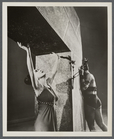
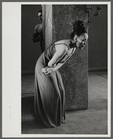
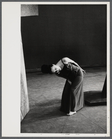
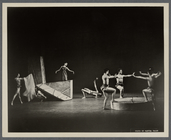
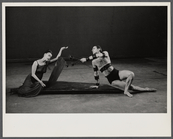
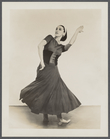
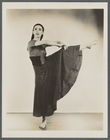
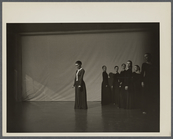
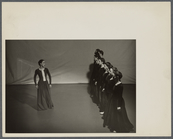
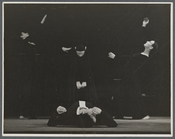
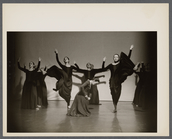
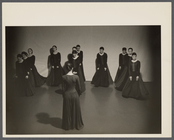
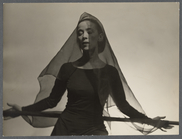
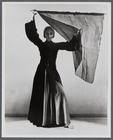
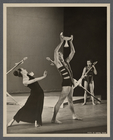
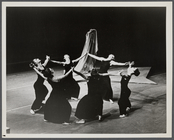
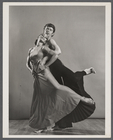
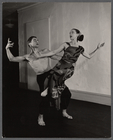
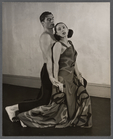
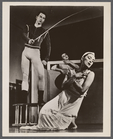
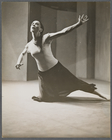
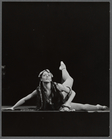
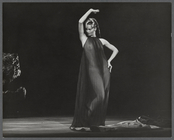
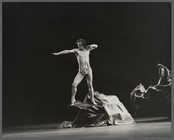
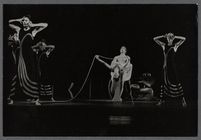
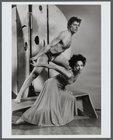
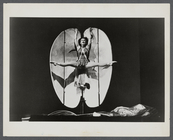
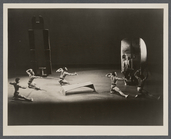
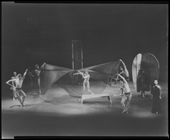
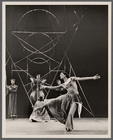
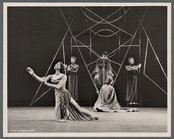
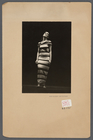
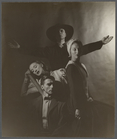
- The Martha Graham Dance Company collection, dating from 1900 to 2017, is comprised of materials that document the career of modern dance pioneer Martha Graham and trace the history of the development of her company and school. The collection is a significant assembly of personal artifacts, correspondence, business documentation, costume designs, photographs, touring files, publications, posters, performance programs, and audio and moving image recordings.
- Names
- Martha Graham Dance Company (Creator)
- Avedon, Richard (Photographer)
- Copland, Aaron, 1900-1990 (Contributor)
- Eagle, Arnold (Photographer)
- Eilber, Janet (Contributor)
- Graham, Martha (Contributor)
- Horst, Louis (Contributor)
- Lekberg, Barbara (Photographer)
- Marcus, Joan (Photographer)
- Morgan, Barbara Brooks, 1900-1992 (Photographer)
- Noguchi, Isamu, 1904-1988 (Contributor)
- Rogers, Helen Priest (Contributor)
- Rothschild, B. de (Contributor)
- Sanders, Dora (Photographer)
- Sunami, Soichi, 1885-1971 (Photographer)
- Swope, Martha (Photographer)
- Dates / Origin
- Date Created: 1900 - 2017
- Library locations
- Jerome Robbins Dance Division
- Shelf locator: *MGZMD 532
- Topics
- Halston, 1932-1990
- Hawkins, Erick
- Choreographers -- United States -- 20th century
- Dance
- Dance companies
- Modern dance -- United States
- Women choreographers -- United States
- Women dancers
- dancers
- Martha Graham Dance Company
- Genres
- Albums (Books)
- Business correspondence
- Contracts
- Fliers (Ephemera)
- Correspondence
- notes (documents)
- Photographs
- Posters
- Programs
- Notes
- Biographical/historical: Martha Graham (born May 11, 1894 in Allegheny, Pennsylvania) was an American modern dancer, choreographer, teacher, and founder of the Martha Graham Dance Company. Over the course of her seventy year-long career, she created 181 choreographic works and is renowned for her revolutionary movement style named the Graham technique. Graham's thematic material for her choreography was often informed by modern art, Americana and North American lore, Greek mythology, and female Biblical and historical figures, including Joan of Arc and Emily Dickinson. Graham subverted tradition by retelling these stories from a woman's psyche, which became a trademark of her artistry.
The Martha Graham Dance Company (MGDC) is the oldest American dance company and has been responsible for nurturing many of the most significant twentieth and twenty-first-century modern dancers and choreographers. Dancers who began at MGDC include Merce Cunningham, Erick Hawkins, Pearl Lang, and Paul Taylor. The repertoire has also attracted guest performances from Mikhail Baryshnikov, Liza Minelli, Rudolf Nureyev, Margot Fonteyn, and Maya Plisetskaya.
Martha Graham resided in Allegheny City until she was fourteen when the family moved to Santa Barbara, California. In 1911, she was first exposed to dance at the Mason Opera House in Los Angeles. She watched her future teacher and co-founder of the Denishawn School, Ruth St. Denis. Shortly after this encounter in 1916, Graham's early dance career began at the Denishawn School of Dancing and Related Arts. Two years later, she began teaching and eventually performing with the Denishawn company until 1923. She appeared in title roles in productions of Xochitl, Serenata Morisca, and Spanish Suite I.
After leaving the Denishawn company, Graham embarked on a journey to develop her own specialized dance technique which rebelled against the movement pastiches she learned at Denishawn. Her goal was to express primal human emotion with a stripped-down approach to movement and dance. She wished to remove the decorative aspects of dance and focus on the human body's natural movements while conveying powerful emotional expression. The concept behind the Graham technique is based on a breathing cycle of contraction and release and is widely regarded as the first codified modern dance technique. Her style is also known for dramatic and distinctive floorwork filled with tension. This technique became the hallmark of modern and contemporary dance throughout the twentieth century and continues to be taught today throughout the world.
In 1926, Graham established the Martha Graham and Dance Group in Manhattan (renamed Martha Graham Dance Company in 1941) and debuted her choreography in a concert consisting of eighteen short solo and trio performances. That same year, Graham and Japanese-American photographer Soichi Sunami began their long-time collaboration.
Graham's work Heretic, created in 1929, served as a blueprint for her works to follow in the future. This dance showed a clear diversion from her training at Denishawn and established her style using sharp and constricted movements with dancers in plain, minimally designed, yet evocative clothing.
The works of Graham garnered the attention of artists and composers with whom she would collaborate throughout her career. She began a long and distinguished collaboration with Japanese-American sculptor Isamu Noguchi to create sets and scenery that complemented her modern ethos. Instead of using flats and drops, she opted to use sculpture and three-dimensional set pieces to explore the space in a unique and avant-garde manner.
Until 1938, the company featured an all-female roster. That year, Graham's future husband, Erick Hawkins, joined and danced in the first male-female duet titled American Document. He eventually became Graham's male lead dancer and frequent partner, but they later divorced in 1954. Hawkins' entry into the company opened the door to other male dancers who would later become innovators in their own right such as Merce Cunningham and Paul Taylor.
In 1944, Graham collaborated with Noguchi and composer Aaron Copland to create one of her most iconic works, Appalachian Spring. The piece was conceived around the idea of American pioneers and their challenges as they began life in the wilderness. Graham cast herself in the main role of the young bride, as she often did with her works.
Another artistic mind that figured prominently in Graham's personal and professional life was fashion designer Halston. In the early 1970s, the two forged a close friendship as well as a symbiotic creative relationship. Halston often designed clothing for Graham to wear as well as costumes for her many dances. Graham believed that fabric contributed to a dance's emotional expression, a value that Halston shared.
In 1958, the Martha Graham Dance Company staged the premiere of Clytemnestra, based on an ancient Greek legend. The work was met with critical acclaim and was the only full-length work in Graham's career.
1970 marked the final performance of Graham when she appeared in Cortege of Eagles at age 76. Following her retirement from performing, Graham struggled with depression and alcoholism fueled by her inability to perform her own choreography, being relegated to the stage's wings. However, in 1972, she ceased drinking and went on to choreograph ten new dances, many revivals, and her final completed work Maple Leaf Rag (1990).
Graham continued to choreograph until her death on April 1, 1991 in New York City. Just before her passing, she completed the final draft of Blood Memory, her autobiography, posthumously published that fall.
During her lifetime and after death, Graham was bestowed with countless awards and accolades recognizing her extraordinary contributions to the dance world. In 1976, President Gerald R. Ford bestowed upon Martha Graham the United States' highest civilian honor, The Presidential Medal of Freedom, and declared her a "national treasure," making her the first dancer and choreographer to receive this honor. In 1998, Time Magazine named Martha Graham the "Dancer of the Century," and People Magazine named her among the female "Icons of the Century."
After Graham's death, the company went through several organizational iterations. In 2000, the company endured financial and legal complications during a dispute over the rights to Graham's choreography. Her legacy was left to former Associate Director, Ron Protas, but refused to allow the company to perform. This coincided with low sales, cutbacks to public funding, and growing debt, which ultimately forced performances to be canceled. Consequently, the Graham school, now known as the Martha Graham Center for Contemporary Dance, ceased operations temporarily. However, in 2002, a federal court awarded the rights to Graham's choreography back to the Martha Graham Center of Contemporary Dance. After winning two court cases against Ron Protas in 2004, the company began to stage dances once again.
In 2005, Janet Eilber, a former soloist with MGDC, became the company's current Artistic Director. The Martha Graham Dance Company continues to perform Graham's works as well as newly created pieces inspired by Graham's legacy. The company continues to tour and perform at festivals both nationally and internationally while also looking to the future with new platforms to engage a more diverse audience.
- Content: The Martha Graham Dance Company collection, dating from 1900 to 2017, documents the life and career of modern dance pioneer Martha Graham and traces the history and development of her company and school. The collection is a significant assembly of personal artifacts and papers in addition to administrative documentation that examines the inner workings of the Martha Graham Dance Company. The collection contains artifacts, correspondence, choreographic notes, business documentation, set and costume designs, photographs, touring files, publications, posters, performance programs, and audio and moving image recordings. The Audio and Moving Image recordings consist largely of performance and rehearsal footage for the Martha Graham Dance Company. There are also recordings of classes and performances by the Martha Graham Dance Ensemble and the students at the Martha Graham School of Contemporary Dance. In addition to the rehearsal and performance recordings, there are also news broadcasts and interviews, as well as short promotional videos for the dance school and company.
- Physical Description
- Extent: 67.56 linear feet (138 boxes, 58 oversize folders, 1 tube)
- Type of Resource
- Text
- Still image
- Identifiers
- Other local Identifier: (S) *MGZMD 532
- NYPL catalog ID (B-number): b22896023
- MSS Unit ID: 29978
- Universal Unique Identifier (UUID): 9d19f2d0-133a-013e-4756-0242ac110003