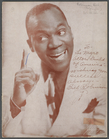
Negro Actors Guild of America records

This collection is also available in Archives & Manuscripts
View In Archives »

Collection Data

Description
The Negro Actors Guild (NAG) was formed in 1936 and began operation in 1937 in New York City as a welfare and benevolent organization for Black performers. The Negro Actors Guild (NAG) records document the functions and activities of this professional organization.
Names
Negro Actors Guild of America (Creator)
Brewster, Townsend, 1924-
Childress, Alice
Freeman, Kenn, 1917-
Whipper, Leigh R. (Leigh Rollin), 1877-1975
Negro Actors Guild of America
Dates / Origin
Date Created: 1904 - 1982
Library locations
Schomburg Center for Research in Black Culture, Manuscripts, Archives and Rare Books Division
Shelf locator: Sc MG 259
Topics
Anderson, Marian, 1897-1993
Ellington, Duke, 1899-1974
Handy, W. C. (William Christopher), 1873-1958
Jessye, Eva, 1895-1992
Razaf, Andy, 1895-1973
Robinson, Bill, 1878-1949
Wallace, Emmett Babe, 1909-2006
Waters, Ethel, 1896-1977
African American actors
African American actresses
African American dramatists
African American entertainers
African American theater
African American women dramatists
African American women entertainers
African Americans -- Music
African Americans -- New York (State) -- New York -- Charities
African Americans in the performing arts
American drama -- African American authors
Genres
Ephemera
Documents
Typescripts
Notes
Biographical/historical: The Negro Actors Guild (NAG) was formed in 1936 and began operation in 1937 in New York City as a welfare and benevolent organization for Black performers. It was established with the assistance of the Theatre Authority (The Theatre Authority is a non-profit organization administering and regulating the free appearances of performers for its member organizations; performances are presented to benefit a variety of health and other groups. The Theatre Authority receives a small percentage of box office receipts from benefits, and some of the monies are returned to the member guilds to be used by their welfare programs), which encouraged black performers to form the Guild in order to become eligible for funds it dispersed. Among the founding members of NAG were Fredi Washington, W. C. Handy, Paul Robeson and Ethel Waters. Bill "Bojangles" Robinson was named honorary president. Noble Sissle was the first elected president, 1937-1957; followed by Leigh Whipper, 1957-1960; Frederick O'Neal, 1960-1964; Charles "Honi" Coles, 1964-ca. 1980; and James Randolph, 1980-1981. The last current available membership list of the Guild (1983) lists 878 members, a staff of one, and Harold Leonard as executive secretary. The Guild was composed of six committees: finance, administrative, membership, entertainment, sick, and welfare. An executive board provided oversight for the activities of the committees. The finance committee's duties were to oversee all office procedures; the membership committee sponsored drives, and promoted goodwill among the members and was responsible for raising funds (yearly membership dues were only $5); and the entertainment committee organized and sponsored a wide variety of benefits and programs whose proceeds were used primarily to assist needy entertainers. Benefit performances included midnight shows, luncheons, moonlight boat rides, and a Gala Night of Super Stars - Tribute to Cab Calloway which was a prelude to the proposed annual Black International Arts Festival. A principal source of income was the revenue generated from advertisements published in the annual journals. NAG also sponsored annual memorial services to honor deceased members. Two other core committees were the sick committee which oversaw visitations of the sick in homes and hospitals, and the distribution of food baskets, and gifts at Christmas time; and the welfare committee which carried out the primary aim and purpose of the Guild: to give financial aid to entertainers. The welfare fund spent thousands of dollars annually on entertainers (a recipient of NAG financial support did not have to be a member or black, although the vast majority were). Typical services included payment toward the cost of burials, rent, food, and utility bills, in addition to providing assistance with medical bills, and providing carfare and warm coats, and sending flowers. NAG also published a quarterly journal, "The Negro Actor" from 1938-1940, which was superseded by a monthly newsletter. A significant function was performed by the actor Kenn Freeman, who served as the Guild's historian. He responded to inquiries from the public regarding the history of black entertainment and compiled an archive on the subject consisting of scripts, programs and playbills, and newsclippings and magazine articles, in addition to photographs, cassette and phonograph recordings, musical scores, orchestrations and other documents. NAG's operating funds came from donations, stipends from the Theatre Authority, membership dues, and proceeds from the various functions the Guild sponsored (e.g., benefit performances, sales of souvenir journals), however funds were limited until the 1970s when NAG received monies bequeathed to it by the Carl and Fania Van Vechten estates. According to one source, the Guild received two sums of monies from the Van Vechten estates. A portion of it became available in 1976, the 40th anniversary year of the Guild; it is not clear when the second portion of the money was received. Members were told about the gift at a membership meeting, where the Secretary, composer Valdo Freeman, informed them that the Guild would receive approximately $75,000 from the Van Vechten estate and that more funds would be forthcoming at a later date. With this infusion of money in late 1976, the treasury held approximately $107,000 in its combined welfare, entertainment and general accounts, the largest sum in its history. Nonetheless, within a few years the organization would become embroiled in factional infighting and legal battles which would lead to its dissolution in 1982. Contention from within had occurred at various times in the history of the Guild resulting in three administrative secretaries leaving the Guild under controversial circumstances. In 1949 Mabel Roane Subblett, wife of Bubbles Subblett of the famous Buck and Bubbles singing-dancing-comedy team, was indicted and found guilty of grand larceny and forgery involving thousands of dollars of NAG funds; Aileen Avery became involved in friction with Kenn Freeman and apparently hired a lawyer to protect herself from the Guild. The last incident involved Ernestine Allen, who was accused of mishandling large sums of Guild funds. It was the charges against Ms. Allen that led to the factional infighting and resulting court case instituted by one of the factions, which eventually led to the demise of the Guild.
Content: The Negro Actors Guild Records document the functions and activities of this professional organization. The collection encompasses the constitution and by-laws, reports of meetings and minutes of the executive board; general office files reflecting the significant issues in the early operation of NAG; membership records; and financial records including receipt books for paid membership dues, cancelled checks indicating purpose of welfare fund expenditures in addition to audits, statements and monthly reports. Entertainment committee records include programs, flyers and planning documents for the numerous benefits and programs sponsored by this committee; welfare fund records include reports and printed matter. Of special interest are the historical collections including typescripts, performers' historical file, programs and playbills and newsclippings pertaining to various aspects of the performing arts.
Physical Description
Extent: 40 boxes 18.83 linear feet
Type of Resource
Text
Identifiers
Other local Identifier: Sc MG 259
NYPL catalog ID (B-number): b11868608
MSS Unit ID: 20746
Universal Unique Identifier (UUID): 1d985c10-40f4-013f-0504-0242ac110002
Show filters Hide filters
1 result found