This collection is also available in Archives & Manuscripts
View In Archives »
Collection Data
- Description
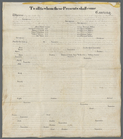
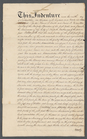
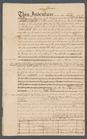
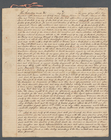
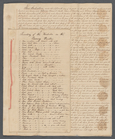
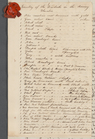
- William B. Astor (William Backhouse Astor, 1792-1875) was the son of German-born fur-trader, financier, and real estate investor John Jacob Astor (1763-1848). The William B. Astor papers, 1826-1931 (bulk 1826-1890), contain legal, financial, and property records relating to Astor's personal estate and its distribution after his death, as well as four photographic images of Astor family members and properties. Also present are business papers held by his uncle Henry Astor (1754-1833) as principal investor and later treasurer of the New York Association, which created and owned the New York Theatre (later the Bowery Theatre) in New York City; William B. Astor inherited Henry Astor's assets in the venture when the latter died in 1833. The business papers provide significant details on the construction and decoration of the first iteration of the New York Theatre, its reconstruction after a fire in 1828, properties used to stage productions, and its financial management. The collection also contains some loose letters and documents.
- Names
- Astor, William B. (William Backhouse), 1792-1875 (Creator)
- Astor, William B. (William Backhouse), 1792-1875 (Author)
- Astor, Henry, 1754-1833 (Author)
- Dates / Origin
- Date Created: 1826 - 1931
- Library locations
- Manuscripts and Archives Division
- Shelf locator: MssCol 29973
- Topics
- Astor family
- Bowery Theatre (New York, N.Y.)
- Artisans -- New York (State) -- New York
- Capitalists and financiers -- New York (State) -- New York
- Merchants -- New York (State) -- New York
- Real property -- New York (State) -- New York
- Theater management -- New York (State) -- New York
- Theaters -- Design and construction -- New York (State) -- New York
- Theaters -- Stage-setting and scenery -- New York (State) -- New York
- New York Association (New York, N.Y.)
- Genres
- accounts
- Correspondence
- estate administration records
- financial records
- indentures
- insurance policies
- legal documents
- Photographs
- property records
- Documents
- Notes
- Biographical/historical: William B. Astor (William Backhouse Astor, 1792-1875) was the son of German-born financier, fur trader, and real estate investor John Jacob Astor (1763-1848) and Sarah Todd (1761-1834). William's older brother, John Jacob Astor Jr. (or "II," 1791-1868), suffered from mental illness for most of his life, leaving William as his father's main support and successor in business affairs.
John Jacob Astor's older brother Henry (1754-1833) was a prosperous Manhattan butcher and real estate owner. In 1785, Henry Astor purchased sixteen lots of land from Nicholas Bayard on part of the block bounded by Canal Street and Bayard Street to the north and south, and by the Bowery and Elizabeth Street to the east and west. The property included the historic Bull's Head tavern and cattle pens, on the west side of the Bowery below Canal. Henry Astor and a group of investors, together known as the New York Association, decided to build a theater on his property, to be known as the New York Theatre (later the Bowery Theatre). The theater opened for performances in 1826, the tavern and stockyards having relocated to Third Avenue and Twenty-Fourth Street.
Henry Astor and his wife Dorothea (d. 1833) had no children; he left extensive legacies to family members in his will. William B. Astor received Henry Astor's investments in the Bowery Theatre, as well as the mortgage held on the land.
William B. Astor married Margaret Armstrong (1800-1872), the daughter of John Armstrong Jr. (1758-1843), in 1818. They resided at Astor House on Lafayette Place, in Manhattan, and at Rokeby, the former Amstrong estate in Dutchess County, New York. The couple had six children: daughters Emily Astor Ward (1819-1841), Mary Alida Astor Carey (1823-1881), and Laura Astor Delano (1824-1902), and sons John Jacob Astor (III, 1822-1890), William B. Astor, Jr. (William Backhouse Astor, 1829-1892), and Henry Astor (1830-1918). John Jacob Astor III was sometimes referred to as Jr. or II, depending on reference to his uncle. Among William B. Astor Senior's philanthropic beneficiaries was the Astor Library, founded in 1849 under the terms of his father's will; he served for a time as its president. The Astor Library, the Lenox Library, and the Tilden Trust were consolidated in 1895 to form The New York Public Library.
Henry Astor, the New York Association, and the Bowery Theatre
Henry Astor (1754-1833) was a founder and principal shareholder of the New York Association, a joint stock association in New York City which built and owned the New York Theatre (later the Bowery Theatre). The Theatre itself rested on property owned by Henry Astor and his wife; the Association purchased the land from the Astors but owed a heavy mortgage on it. Other real property transactions between Henry Astor and the Association would follow. The New York Association was sometimes denoted as the New York Theatre Association in records found in this collection.
The articles of the Association were signed on December 29, 1826, nullifying earlier articles enabling the construction of the theater. The articles set forth the financial means by which the Association acquired the land from the Astors, the names of officers and trustees, and operational procedures. Business was conducted by three trustees, a secretary, and a treasurer. The Association's trustees included James A. Hamilton (1788-1878), Thomas L. Smith, and William Seaman, and Michael B. Walsh was its secretary. Smith, Hamilton and Henry Astor were treasurers, consecutively, with William B. Astor handling accounts at the end of his uncle's life. Samuel L. Gouverneur (1799-1867), another major shareholder, also figured in the theater's management.
The cornerstone of the New York Theatre was laid on June 17, 1826, and its first production, "The Road to Ruin," opened on October 23, 1826. It was the largest public theater in America at the time. Located on the west side of the Bowery, midway between Canal and Bayard Streets, it spanned the entire width of the block to Elizabeth Street.
The theater, intended for a respectable clientele, was constructed in Greek-Revival style under the design of architect Ithiel Town, of the firm Geer, Riley, Town and Tucker. In less than two years the building was in ruins, destroyed by a fire spreading from a nearby stable on the evening of May 26, 1828. The theater was quickly rebuilt, this time by architect Joseph Sera, and reopened on August 20, 1828 as the Bowery Theatre, making its colloquial name official. In order to compete with local theaters, the Theatre broadened its fare to appeal to working class audiences, offering a mix of Shakespeare, dramas, comedies, "fancy dances," and popular melodramas, often incorporating spectacular military and equestrian displays. The theater building would succumb to fire several more times in its history, surviving until its final reconstruction was demolished after a fire in 1929.
The Association operated the theater through a system of lease agreements. Managers either held a lease from the Association, or were hired by the lessee, to run productions, hire theatrical performers, and maintain the building and its properties. Lessees represented in the papers are Samuel L. Gouverneur, James H. Hackett, and Thomas S. Hamblin. Charles Gilfert opened the Theatre's first production in 1826. James H. Hackett became manager after Gilfert's death in July 1829. He was succeeded by actor Thomas S. Hamblin when Hackett's lease expired on September 1, 1830. An effective manager, Hamblin began purchasing shares in the Association. For a time, the name American Theatre, Bowery appeared on playbills for the Bowery Theatre.
After Henry Astor's death in 1833, his accounts as treasurer, and those of William B. Astor, were audited and settled by agreement. The theater once again lay in ruins after a fire on September 22, 1836. The New York Association apparently ceased its association with Hamblin in early October 1836, with Hamblin now the only shareholder and owner of the theater. Hamblin continued paying the Astor mortgage and built a new group of shareholders. Following Hamblin's death on January 8, 1853, his heirs sold the Bowery Theatre and the lots on which it rested in 1854, and the Astor mortgage was finally paid off.
Sources:
Bogar, Thomas A. Thomas Hamblin and the Bowery Theatre: The New York Reign of "Blood and Thunder" Melodramas. Cham, Switzerland: Palgrave Macmillan, [2018].
Chrysalis Archaeological Consultants, Inc. Phase IA Historical Documentary Report and Archaeological Assessment of 50 Bowery (Block 202, Lot 23), New York County, New York. New York: Chrysalis Archaeological Consultants, Inc., 2013. http://s-media.nyc.gov/agencies/lpc/arch_reports/1573.pdf
- Content: The William B. Astor papers, 1826-1931 (bulk 1826-1890), contain legal, financial, and property records relating to Astor's personal estate and its distribution after his death, as well as four photographic images of Astor family members and properties. Also present are business papers held by his uncle Henry Astor (1754-1833) as principal investor and later treasurer of the New York Association, which created and owned the New York Theatre (later the Bowery Theatre) in New York City; William B. Astor inherited Henry Astor's assets in the venture when the latter died in 1833. The business papers provide significant details on the construction and decoration of the first iteration of the New York Theatre, its reconstruction after a fire in 1828, properties used to stage productions, and its financial management. The collection also contains some loose letters and documents.
- Physical Description
- Extent: 6 boxes, 4 oversize folders 1.87 linear feet
- Negatives
- Type of Resource
- Text
- Identifiers
- NYPL catalog ID (B-number): b23710069
- MSS Unit ID: 29973
- Universal Unique Identifier (UUID): da21fd60-ea6f-013e-fe66-0242ac110002